Where the Soil Level in a Raised Bed Actually Goes
Every March for the past few years I’ve knelt down next to the oldest raised bed, the one that’s now six years old, and noticed the same thing: the soil sits a good two or three inches below the top edge of the boards, even though I filled it right up to the rim the previous spring. I used to think I was imagining it, but I’ve started keeping rough track, and it happens every single year, no matter how carefully I filled the bed the season before.
The first time I noticed the drop
I didn’t pay attention to this at all in the first year or two we had the beds. I just kept planting and watering and didn’t think much about the soil line. It was only around year three, when I planted seedlings close to the edge of the oldest bed and noticed their roots looked slightly exposed by midsummer, that I started actually watching where the soil level sat from one season to the next. Once I noticed it that first time, I couldn’t stop noticing it, and I’ve checked the level every spring since.
Where I think the soil actually goes
Some of it is straightforward. Organic material in the mix, old compost, bits of leaf litter, anything that isn’t mineral soil, keeps breaking down over the season and takes up less space as it does. Watering compacts the soil too, especially after a heavy rain, pressing air pockets closed that were there when I first filled the bed. And some soil, I’m fairly sure, just gets carried off the top with every weeding session, clinging to roots I pull out and to my own boots when I step in to work. None of these are dramatic on their own, but added up over a whole season, they explain most of what I see.
Checking the level isn’t complicated
I don’t use any special tool for this, just a rough visual check against the top board of the frame, sometimes backed up with a tape measure if I want an actual number to compare with the year before. It takes maybe two minutes for all four beds combined. I’ve thought about writing the numbers down properly every year, in some kind of notebook, but so far I’ve mostly just kept them in my head, which is probably why I only trust the general pattern and not the exact inches.
How much I actually top up each spring
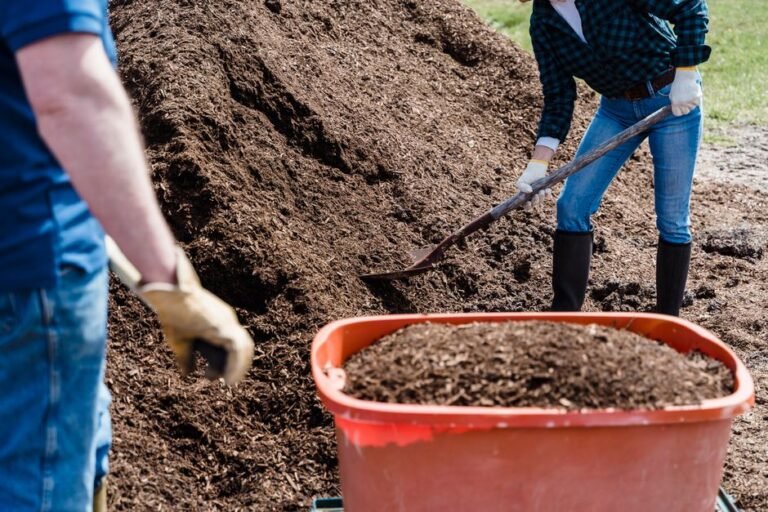
For the oldest bed, I’ve ended up adding somewhere around two to three inches of new material most years, a mix of compost from the bin and a bag or two of soil depending on how much the bin gave me. The newer beds don’t need nearly as much, which makes sense, since they haven’t gone through as many freeze and thaw cycles or as many seasons of watering pressing everything down. The difference between the oldest bed and the newest one is easy to see just by comparing how much I have to add to each.
What I got wrong for a while
For a couple of years I assumed the drop meant something was wrong, that I’d filled the bed incorrectly the first time or that the wood sides were somehow letting soil leak out underneath. I spent one whole afternoon checking the bottom edges of the boards for gaps before I realized that’s just not where the soil was going. It was a normal, slow settling process the whole time, and I’d wasted an afternoon looking for a problem that didn’t exist. I felt a little silly about it afterward, but at least I ruled it out for good.
What the topping up taught me about the beds themselves
Once I stopped worrying about the drop and just started expecting it, I got better at reading what each bed needed. The oldest bed, with six years of settling behind it, has a denser, more compacted structure lower down that I can feel through the spade when I dig in it now, compared to how loose the newest bed still feels. Topping it up every spring isn’t really optional maintenance anymore, it’s just part of how I open the gardening season, the same way I clean out the compost bin or check the fence line. It’s become one of those small rituals that mark the start of the year in the yard.
Comparing the oldest and newest beds side by side
What surprised me most was how different the four beds have become from one another, even though I filled all of them roughly the same way at the start. The oldest bed feels firmer underfoot near the bottom, holds water a little differently after rain, and needs the most consistent topping up. The newest bed still feels closer to how the oldest one did in its first year or two. It’s a slow, gradual change I only notice because I’ve been paying attention across all four beds for long enough now.
How I plan the topping up now
These days I try to save enough compost through the winter specifically for this job, rather than scrambling to buy bags of soil in March when everyone else seems to have the same idea. It doesn’t always work out, some winters the compost bin gives me less than I hoped, but having a rough plan for it beats the years I just knelt there staring at the gap wondering what happened.